Goodbye, scalability worries on Ethereum? For several years now, the Ethereum is facing major scalability problems. From now on, its roadmap rollup-centric puts second-layer solutions at the heart of scalability problems. Still experimental only recently, these solutions are constantly evolving and attracting new users.
The galloping adoption of rollups on Ethereum
Visit rollups are second layer solutions which aim to shift part of the activity away from Ethereum’s main chain. However, this is not at the expense of security. Indeed, periodic publication of rollup status and cryptographic proofs enables them to inherit the security of the underlying network.
In August 2021, the Arbitrum rollup was deployed on the mainnet. Since then, solutions have multiplied. The ecosystem now includes 28 different rollupsand new ones are under construction.
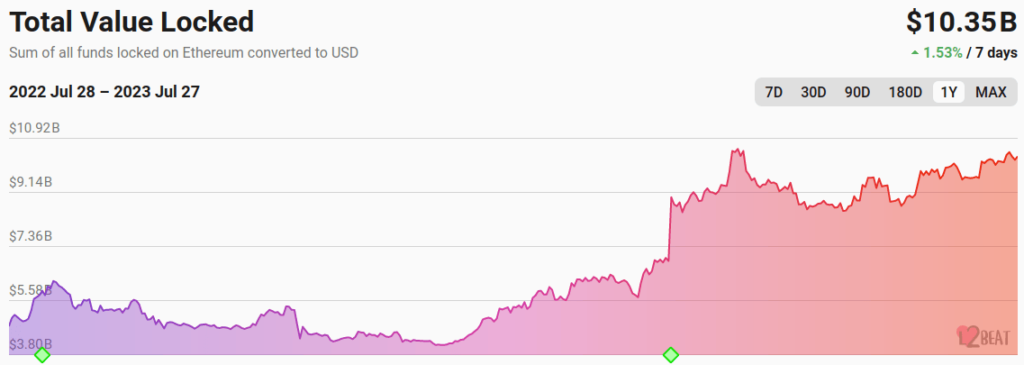
Within a year, TVL second layer solutions more than doubled. In fact, it rose from $4.7 billion in July 2022 to 10.3 billion dollars at the time of writing.

Another crucial event also took place over the past year. Last October, layers 2 surpassed for the first time Ethereum in terms of activity. In fact, since October 2022, L2s have been processing more transactions per second on average than Ethereum.
Currently, they process an average of four times as many transactions than the main network. On average, we have 46 transactions per second on all L2s, compared with just under 12 on Ethereum.

In addition rollups offer varied ecosystems. Some solutions, such as Arbitrum Nova, are better suited to blockchain games. Others, such as Arbitrum, are better suited to DeFi.
Discounted fees on those famous layers 2
As we’ve discussed, L2s are solutions aimed at improving the scalability of the Ethereum network. Consequently, fees are a central metric for judging the success of these projects.
Data compiled by l2fees demonstrate a the success of L2s in terms of fees. Indeed, most L2s offer fees of around 10 times cheaper than Ethereum.

These costs could be further reduced when the hard fork Cancun on Ethereum. This will introduce the Proto-danksharding updatewhich will considerably improve rollup performance.
Watch out for safety!
Nevertheless, these solutions are still far from perfect. In fact, they still face a number of challenges. numerous risksmore or less critical.
We can cite in particular centralization almost systematic Sequencers on rollups. Although in most cases this doesn’t put users’ funds at risk, the practice remains far removed from cryptocurrencies’ founding values of decentralization.
The L2Beats website offers an excellent overview of these different solutions and the risks associated with them.

Nevertheless, it’s important to note that these are still emerging solutions. For this reason, they should improve in terms of safety and decentralization over the coming months and years.
L2s are so popular that some layer 1 projects are planning to migrate to the second layer. One example is blockchain. Celo, which plans to become an Ethereum L2by leveraging Optimism’s technology stack.
Rollups and decentralized finance a little beyond you? Go for it rather register with Binance THE leading crypto platform, and receive a 10% discount on your trading fees (commercial link).